Participatory governance: a new model for community leadership
In the community sector, governance is largely about ensuring that organisations stay accountable to priorities that have been set by its leaders, rather than the communities they serve. Even where organisations endeavour to be responsive to the aspirations of communities on the ground, structural limitations prevent this.
Boards carry legal responsibility but are often distant from the realities on the ground and rely on the reports and recommendations of executive management to make decisions. Executive management are often accountable upward to funders and regulators rather than downward to communities, which means that executives are less likely to see issues clearly unless they immediately affect funding, organisational reputation ro delivery targets. Community input may sometimes be gathered through consultations or advisory groups, but rarely with a representative cross-section of the community. Concerns that might be noticed by frontline staff or community members are rarely able to be effectively communicated in a way that influences organisational decision-making.
Within a traditional system of organisational Governance, the strengths that different people in the community and organisation have to offer - the prudent supervision of a board; the decision-making acumen of an executive; the insights of frontline workers; and the lived experience of community members - are seldom harnessed or effectively integrated.
Empowerment Ecosystems uses a different governance structure to address this problem.
Community Governance Council
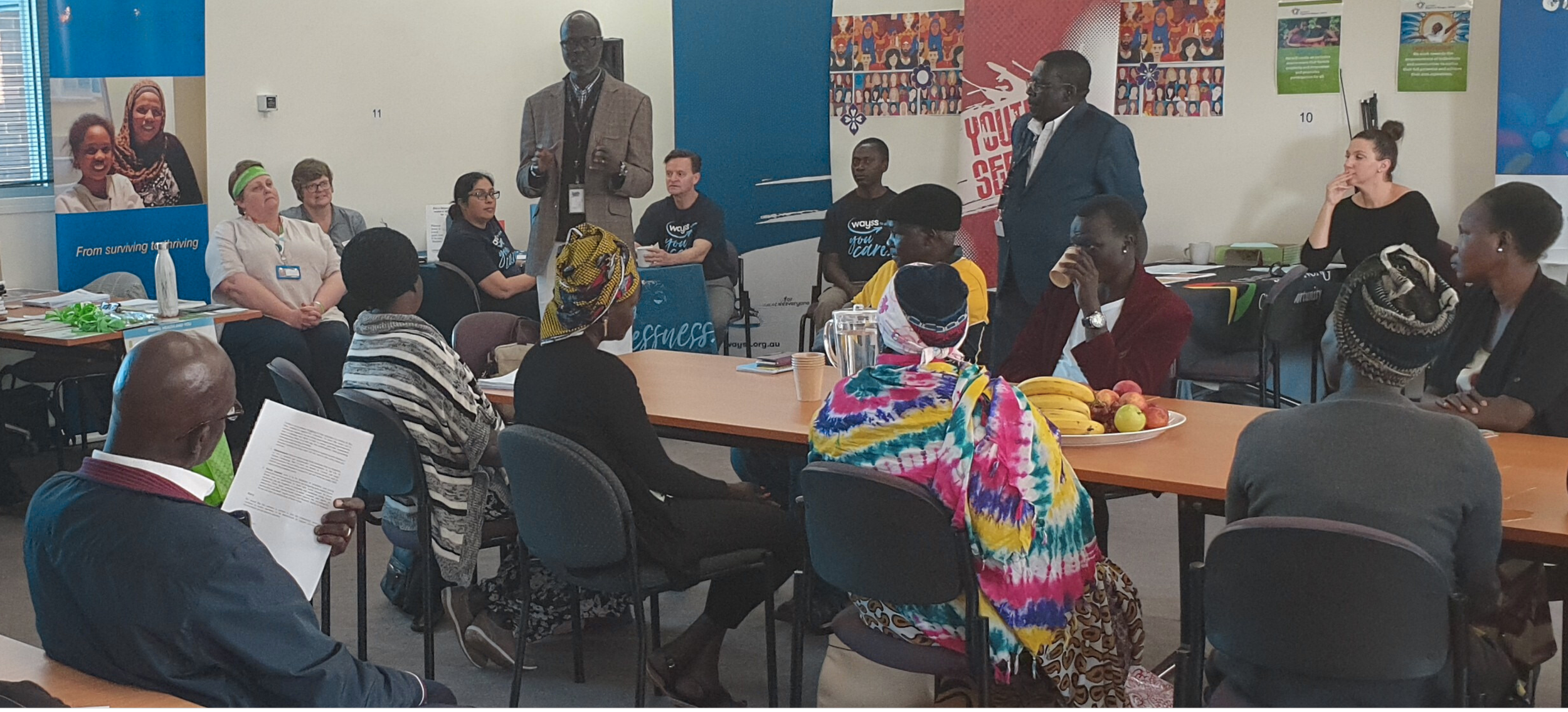
Each Empowerment Ecosystem is led locally through a Community Governance Council (CGC).
The Council is not a single committee, but a tripartite governance system made up of three separate bodies - each with a specific job and clear limits.
The Representative Body plays a key role in setting priorities for the organisation, advocating for the needs and aspirations of the people - frontline staff and community - who make up the community
The Management Committee runs all aspects of organisational development and program delivery, ensuring that organisational policies and plans are adhered to
The Trustees safeguard the purpose and values for the work, guarding against mission drift or values misalignment
All three work cooperatively together.
Empowerment Ecosystems currently has three CGCs under development, covering Melbourne’s Northwest, West, and Southeast regions. The Northwest CGC is operating in an early pilot phase. The West and Southeast CGCs will be established later in the year.
The Representative Body
The Representative Body contributes to decision-making about the organisation’s priorities, by advocating for the needs and aspirations of community members and by making the insights and experiences of frontline staff visible.
Each Representative Body has ten members:
four staff members elected by staff
four community members elected by community participants and local residents
two staff members selected through a community vote
Detailed eligibility rules and election processes are used to ensure that representation reflects the wider community, not just those who are the most confident, well-connected or professionally experienced.
Members of the Representative Body are required to stay in regular contact with the people they represent. This includes holding meetings, collecting feedback and reporting back on decisions.
The Management Committee is required to incorporate and meaningfully action the recommendations of the Representative Body when setting organisational direction.
The Management Committee
The Management Committee is responsible for running the organisation day to day. It includes the CEO and senior staff with delegated authority. This group is responsible for planning, budgets, staffing, compliance, risk management, partnerships, and delivery.
The Management Committee decides how work is carried out, but it does so within the priorities and limits set by the Representative Body. It is required to explain decisions, trade-offs, and outcomes to both the Representative Body and the Trustees.
The Trustees
The Trustees protect the purpose and long-term health of the organisation’s efforts. They do not manage staff, run programs, or make operational decisions.
Their role is to:
define non-negotiable values
protect the governance system from being undermined
take a long-term view across leadership and funding changes
step in when the Representative Body and Management Committee cannot reach agreement
Trustees set boundaries in a similar way to funders, but with an important difference. Their boundaries are based on community priorities, the organisation’s constitution, and clear expectations for community accountability, not external agendas.
Trustees are expected to understand the communities connected to the work and to explain how their decisions align with community priorities.
Pilot phase and ongoing development
This governance model is currently being developed and tested by participatory evaluation and action research, supported by an honorary fellowship with the Melbourne Social Equity Institute at the University of Melbourne. Detailed procedures, election rules, consultation requirements, and decision processes are being developed and defined in the pilot phase of this project.